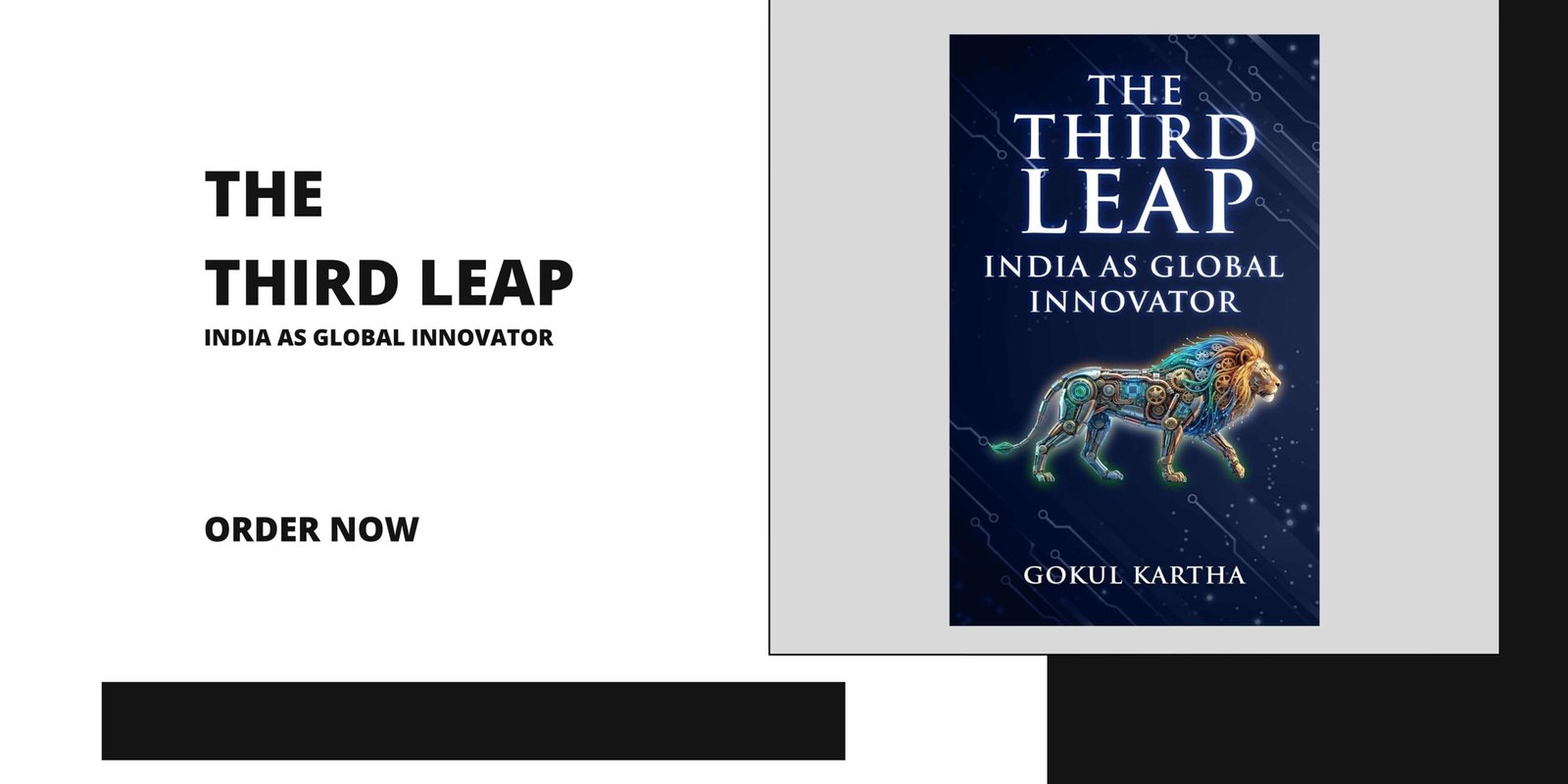
For much of my professional life, I have worked inside complex systems—software platforms that span continents, engineering organizations that evolve over decades, and technologies whose consequences extend far beyond the moment they are built. Over time, a persistent question began to surface: where does India truly stand in the global technology story—and where must it go next?
The Third Leap emerged from that question.
India’s first great transformation was driven by the IT services revolution. It proved that Indian engineers could execute at world scale, with discipline and excellence. The second leap, powered by Digital Public Infrastructure, showed that we could design population-scale systems that are open, resilient, and globally admired. These were necessary and historic achievements—but they are no longer enough.
We now live in a century defined by silicon and code. Power, prosperity, and sovereignty are increasingly determined not by who uses technology best, but by who builds and owns its foundations. Semiconductors, operating systems, AI models, cybersecurity frameworks, clean energy platforms, and space systems are no longer just technical domains; they are instruments of national capability and long-term independence.
This book is my attempt to articulate why India must now move from being the world’s greatest executor to becoming a global designer of core technologies.
Writing The Third Leap required stepping back from day-to-day engineering and looking at the system as a whole—history, geopolitics, education, capital, talent, and institutions. What became clear is that no single policy, company, or breakthrough will define the future. What matters is whether we can align universities, industry, government, and capital around long-horizon thinking and deep-tech creation.
At the heart of this transition is a new kind of technologist—the Renaissance Engineer. Someone who understands not just code, but context. Not just performance, but purpose. These engineers will be as comfortable with first principles as they are with ethics, with architecture as much as with accountability.
This book is not written as a prediction, but as an invitation. An invitation to imagine an India that does not rent its technological foundations from the world, but builds them—carefully, openly, and responsibly—and shares them as trusted global systems.
The Third Leap is not guaranteed. It demands patience, courage, and collective resolve. But it is possible. And in this moment of global realignment, it may be India’s most important opportunity—not merely to participate in the future, but to design it.
Buy Now: https://www.amazon.in/dp/937002087X